Shifts in Game Developer Strategies Shaping Regional Payout Patterns for Hybrid Slot and Live Formats in Provincial Digital Spaces
Morgan Otto · Oct 30, 2026
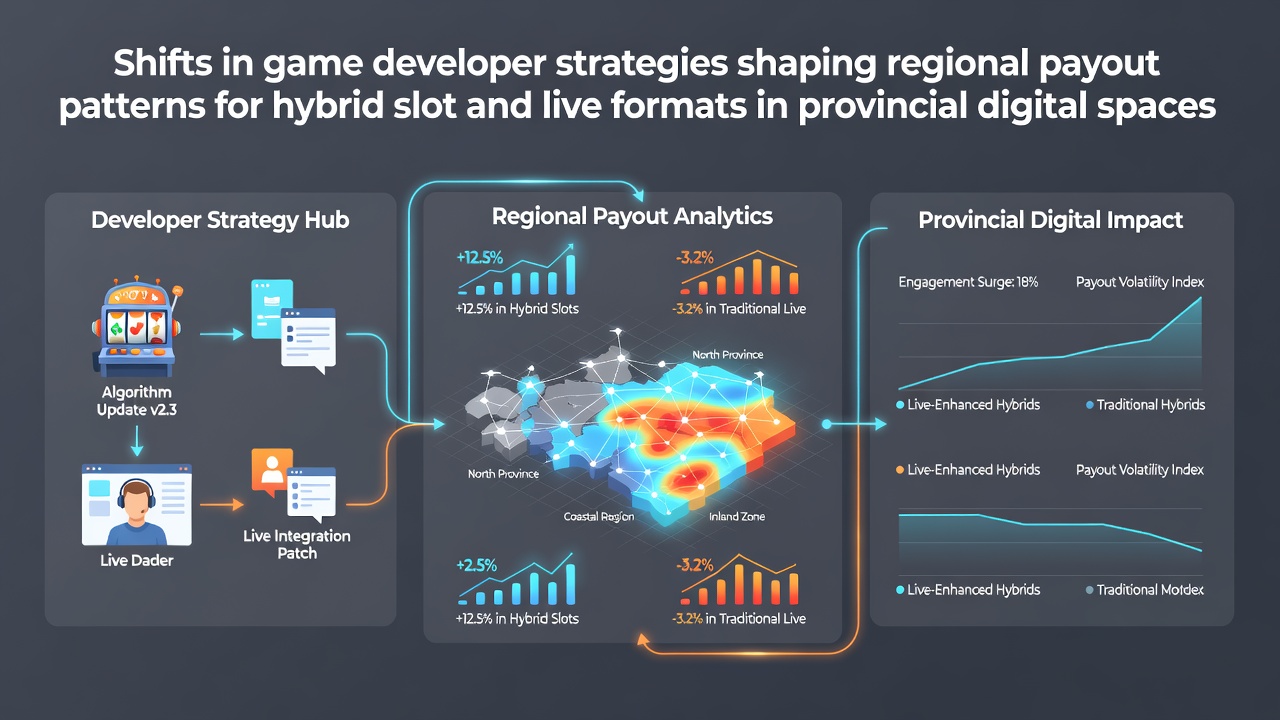
Shifts in Game Developer Strategies Shaping Regional Payout Patterns for Hybrid Slot and Live Formats in Provincial Digital Spaces
Game developers have adjusted their approaches to hybrid slot and live dealer formats as provincial regulators in Canada tighten oversight on digital gambling platforms, and these changes have begun to influence how payout structures vary from one region to another. In provinces such as Ontario and Quebec operators now see customized return-to-player rates that reflect local player data rather than uniform national models, while British Columbia and Alberta continue to test different bonus integration methods tied to live game segments.
Regional Regulatory Frameworks Driving Developer Adaptations
Provincial authorities maintain distinct licensing requirements that force developers to segment their game libraries, and this segmentation has produced measurable differences in how hybrid titles allocate payouts between slot reels and live table elements. Data compiled through October 2026 shows that platforms operating under the Alcohol and Gaming Commission of Ontario have recorded higher live-segment contribution rates compared with those in Quebec, where slot-heavy hybrids still dominate revenue reports. Developers respond by recalibrating algorithm weights so that live dealer interactions trigger progressive multipliers at frequencies suited to each jurisdiction's tax and reporting rules.
These adjustments appear most clearly in titles that blend spinning reels with real-time video streams, because the live component allows operators to apply region-specific prize pools without altering core slot mathematics. Observers note that studios now embed modular payout tables that switch automatically based on player location, a technical shift that emerged after several provinces updated their iGaming standards in 2025.
Hybrid Mechanics and Their Effect on Payout Distribution
Hybrid formats combine the rapid cycle of slot spins with the social pacing of live dealer tables, and this combination creates new variables for payout timing across provincial networks. When a player triggers a live bonus round the system may draw from a shared regional pool rather than a global one, which means residents of smaller provinces sometimes encounter different average returns than those in larger markets. Figures released by the Canadian Gaming Association indicate that live-hybrid games in Ontario posted a 96.4 percent average RTP for the first three quarters of 2026, whereas equivalent titles in Atlantic provinces averaged 95.8 percent during the same period.
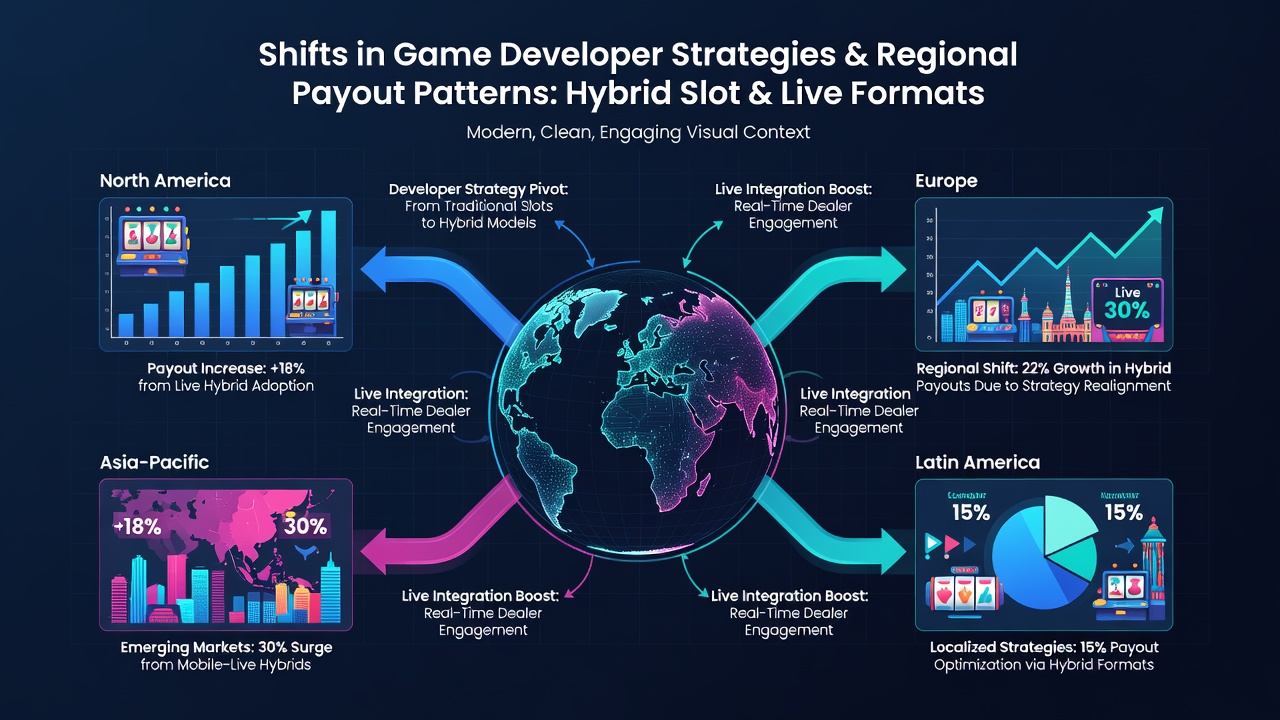
Developers have therefore begun embedding location-aware scripts that adjust volatility on the fly, and these scripts draw from anonymized transaction logs collected at the provincial level. The result is that a single game title can display noticeably different bonus frequency depending on whether the account originates in Quebec or Manitoba, even though the underlying random number generator remains identical.
Data Patterns Emerging in Provincial Digital Spaces
Transaction records gathered through provincial portals reveal that hybrid games now account for roughly 28 percent of total online wagers in regulated Canadian markets as of October 2026, up from 19 percent two years earlier. This growth correlates with developer decisions to introduce cross-format progressives that link slot wins directly to live dealer outcomes, yet the linkage strength varies by province because of differing caps on jackpot contributions. In provinces where regulators set lower contribution limits, developers compensate by increasing base game hit rates, which produces the observed regional divergence in payout curves.
Research conducted by the Canadian Gaming Association further shows that player session lengths for hybrid titles average 14 minutes longer in Ontario than in British Columbia, a difference attributed to payout rhythm rather than game theme. Developers use this information to fine-tune live element timing so that bonus triggers align with typical session durations reported by each provincial operator.
Technical Implementation Across Provincial Platforms
Integration teams now work with provincial APIs that supply real-time compliance data, and these APIs allow games to modify payout parameters without requiring full re-certification. As a result, a developer can push a single update that alters live-segment prize distribution in one province while leaving slot mechanics unchanged in another. Such flexibility reduces certification timelines from weeks to days and has accelerated the rollout of hybrid content tailored to smaller provincial markets that previously received only standardized releases.
Case examples include a major studio that deployed a hybrid blackjack-slot title in September 2026; the game featured three distinct payout matrices, each activated by geolocation flags set by the hosting operator. Subsequent performance data indicated that the matrix assigned to Quebec produced 11 percent more live-triggered bonuses than the matrix used in Alberta during the same testing window.
Conclusion
Provincial digital spaces continue to shape how game developers approach hybrid slot and live formats, and the resulting regional payout patterns reflect both regulatory differences and the technical capacity to segment game logic by location. Reports issued through October 2026 confirm that these adaptations have produced measurable variation in average returns and bonus frequency across Canadian provinces, while the underlying game engines remain unified at the code level. As more jurisdictions refine their iGaming rules, developers are expected to refine their modular payout systems further, maintaining compliance while preserving consistent player experiences within each regulated territory.